
Delivery Drones on Hold: Navigating Regulatory Hurdles in U.S. Airspace – Sonoran Desert Institute

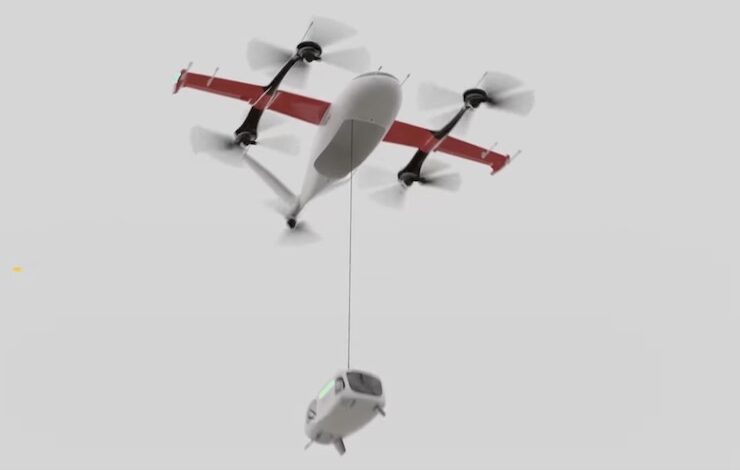
While the technology for drone-based delivery is advancing quickly, the legal landscape it operates in is far less nimble. In the United States, regulatory frameworks continue to lag innovation, leaving many commercial drone operations stuck in a holding pattern. Sonoran Desert Institute (SDI), an institution accredited by the Distance Education Accrediting Commission (DEAC), offers drone education through its training center. Notably, the FAA Part 107 Exam Prep course provided by the training center is not within the scope of DEAC accreditation. For drone delivery to expand nationwide, clear policies, trained operators and seamless airspace integration are essential.
The promise of fast, efficient delivery of food and package delivery is real, but so are the risks. The Federal Aviation Administration is tasked with balancing innovation against safety, privacy and infrastructure readiness. As a result, commercial drone operators face significant limitations, particularly for flights Beyond Visual Line of Sight (BVLOS) and operations over people or moving vehicles.
The FAA’s Cautious Approach
Under current FAA regulations, commercial drone pilots are governed by Part 107, a set of rules that outline where, when and how drones can be flown. While this framework opened the door to legal drone activity, it also introduced strict limitations. Operators are generally required to maintain a visual line of sight with their drone.
However, as of 2021, the FAA permits certain operations over people and at night, without waivers, provided the drone meets specific criteria and the pilot has completed the necessary training. Operations at night, in controlled airspace or dense urban environments, often require additional permissions and coordination with local authorities. The result is that many drone delivery pilot programs remain small-scale and highly localized. Without broader policy support, scaling these services across cities, states or national markets is nearly impossible.
BVLOS: The Missing Link in Nationwide Delivery
One of the biggest challenges facing drone delivery in the U.S. is the restriction on operations beyond visual line of sight. To deliver to homes across multiple neighborhoods or longer rural routes, drones must travel distances well outside the range of a human operator’s direct view.
While waivers for Beyond Visual Line of Sight (BVLOS) operations can be obtained, routine package delivery beyond visual line of sight requires operators to secure a Part 135 air carrier certification from the FAA. Few companies have the resources or technical infrastructure to meet these requirements, making broad deployment cost-prohibitive.
In contrast, countries like Australia and Finland have already established corridors and frameworks that support routine BVLOS delivery flights. The U.S. is still evaluating such systems through pilot programs and test ranges, but progress has been slow and fragmented. As airspace integration grows more complex, drone operators must be trained in regulatory compliance, risk mitigation and flight planning, not just piloting.
The Need for National Integration Plans
Another hurdle is the lack of a standardized Uncrewed Aircraft System Traffic Management (UTM) framework. In busy skies, especially near cities or airports, drones must be able to share airspace with crewed aircraft, emergency services and each other.
The FAA, in collaboration with NASA and industry partners, has been testing UTM prototypes that allow drones to communicate with air traffic systems and each other. These systems have yet to be rolled out at scale or made available to everyday commercial operators. Until such systems are in place, drone deliveries can remain restricted to low-risk environments where airspace conflicts are unlikely. It limits innovation and keeps the industry in a perpetual state of pilot testing.
Data and Privacy Compliance
Beyond flight rules, privacy and data collection regulations also impact drone delivery. Drones equipped with cameras or sensors may unintentionally capture information about people or private property, raising legal and ethical questions about surveillance, data storage and consumer consent.
Several states have introduced their drone-related privacy laws, creating a patchwork of policies that operators must navigate. What’s legal in one state may require additional permissions or restrictions in another. Operators must be trained to understand and respect these boundaries. It means flying legally and responsibly, being aware of public concerns and committing to transparent practices.
The Role of Education and Certification
While technology can continue to develop, regulatory compliance can always depend on the people behind the drones. FAA certification under Part 107 is a legal requirement for all commercial drone pilots, but it is only the starting point.
Pilots must also demonstrate knowledge of airspace classifications, weather conditions, emergency procedures and operational risk management to operate in complex environments or apply for waivers. It requires formal education, hands-on experience and a commitment to continuous learning.
SDI provides training designed to help students prepare for the FAA Part 107 exam and develop the knowledge needed for real-world operations where safety and compliance matter most.
Industry Advocacy and Policy Momentum
Progress is being made. The FAA has established rulemaking committees and industry working groups to gather feedback and explore flexible approaches to BVLOS and over-people operations. Some states and municipalities are also developing drone integration plans that coordinate local ordinances with federal policy.
Leading logistics firms, food delivery services and retailers are actively advocating to move the conversation forward. Their engagement brings both weight and credibility to the regulatory process, increasing the likelihood of meaningful policy changes. Yet progress is still measured, and both operators and educators should anticipate gradual development, rather than immediate transformation.
Public Trust and Perception
Regulatory delays are not solely about bureaucracy. Public trust plays a significant role in how and when rules develop. Lawmakers must respond not only to innovation but to concerns about noise, safety and privacy.
As drone delivery becomes more visible, early programs must model good behavior, safe flights, respectful noise levels, accurate drops and clear communication with communities. These experiences shape public sentiment and, in turn, influence policy. Professionals trained to uphold these standards to help ensure that the industry grows, legally and sustainably.
Charting a Course for Everyday Integration
Drone delivery in the United States is not stalled. It is maturing, guided by a careful regulatory framework that is still working to match the pace of innovation. Moving forward will require continued investment in policy development, public education and the technical infrastructure needed to support safe, scalable operations. The goal is not just to fly more drones, but to do so in a way that is sustainable, secure and widely accepted.
Certified drone operators will be central to this evolution. Their training, professionalism and ability to navigate complex airspace and compliance standards will help translate experimental programs into everyday logistics. As communities grow more familiar with drone activity and regulatory clarity improves, the potential for drone delivery to become a normalized, trusted part of daily life becomes not just possible, but likely.